NVIDIA RTX Spark: The Superchip Bringing AI Directly to Your Computer
NVIDIA's brand-new RTX Spark superchip, unveiled at Computex 2026, is poised to reinvent the personal computer — turning it from a passive tool into an active AI agent right on your desk.
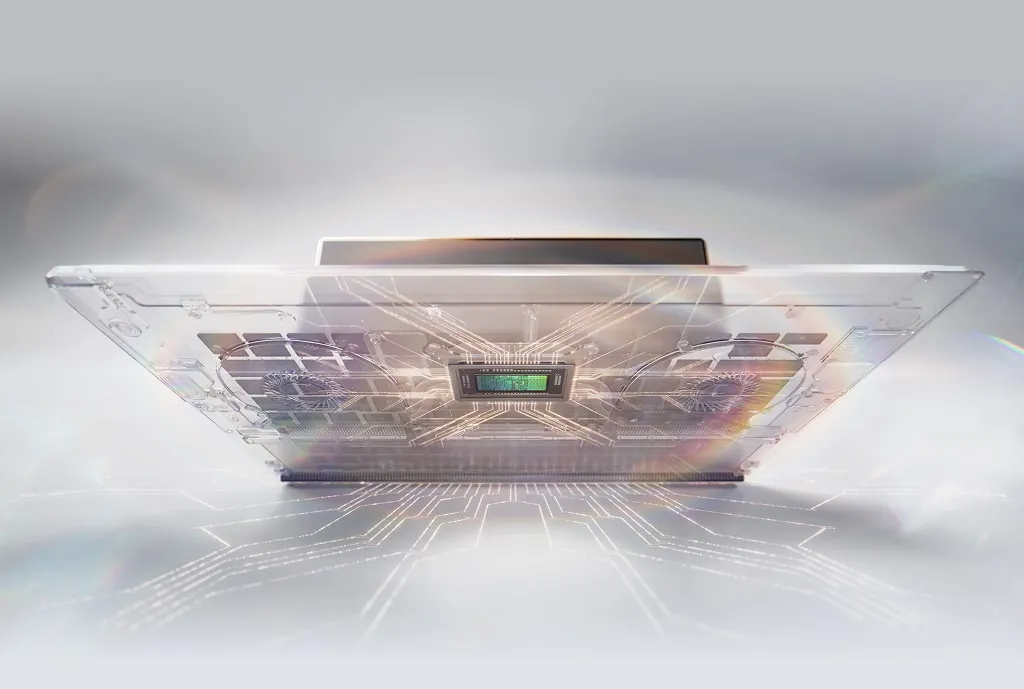
NVIDIA RTX Spark: The Superchip Bringing AI Directly to Your Computer
“This reinvention of the computer is as big of a deal as the reinvention of the phone into what we now know as the smartphone.” — Jensen Huang, CEO, NVIDIA
At Computex 2026 in Taipei, NVIDIA CEO Jensen Huang took the stage and dropped what may be the most consequential personal computing announcement in a decade. Meet the RTX Spark — a superchip that doesn’t just upgrade your laptop or desktop, but fundamentally reimagines what a personal computer is for.
From Cloud AI to Your Lap
For the past few years, AI has lived in the cloud. You type a prompt, a datacenter somewhere does the heavy lifting, and a result comes back. It works — but it’s slow, expensive, and raises real questions about privacy.
RTX Spark changes that equation entirely. NVIDIA is betting that the next frontier of personal computing is local AI — models that run on your machine, responding instantly, without phoning home to a server farm.
The pitch from Huang at Computex was direct: instead of using your PC as a tool you command with a keyboard and mouse, AI agents will become a new interface entirely. You speak your intent, the agent understands context, calls tools, evaluates its own output, and refines it — all locally, at lightning speed.
What Exactly Is RTX Spark?
RTX Spark is what NVIDIA calls a superchip: a single package that combines a CPU and GPU connected over NVIDIA’s own chip-to-chip interconnect, NVLink-C2C. Think of it as NVIDIA’s answer to Apple Silicon — a tightly integrated system-on-chip designed specifically for the Windows ecosystem.
Here’s what’s inside:
| Component | Specification |
|---|---|
| CPU | 20-core Arm (10× Cortex-X925 @ 4.1GHz + 10× Cortex-A725) |
| GPU | Blackwell RTX, 6,144 CUDA cores + 5th-gen Tensor Cores (FP4) |
| Memory | Up to 128GB unified LPDDR5X |
| Memory Bandwidth | Up to 300 GB/s |
| AI Performance | 1 petaflop (FP4) |
| Interconnect | NVLink-C2C chip-to-chip |
That 1 petaflop of AI compute is the headline number. It means RTX Spark is powerful enough to run sophisticated local AI models, handle real-time content creation workloads, and play modern games at 1440p — all from one chip, in a thin laptop form factor.
GPU performance is roughly equivalent to an RTX 5070 laptop GPU, which is a serious graphics card in its own right. The difference is that everything shares one large, fast pool of unified memory — so large AI models, heavy 3D renders, and multi-model workflows can run simultaneously without hitting a memory wall.
Why “Personal AI Agents” Matter
NVIDIA isn’t just talking about faster AI chatbots. The company’s vision is agentic AI — systems that can:
- Set goals on your behalf
- Call external tools and APIs
- Evaluate the quality of their own results
- Refine outputs in a continuous loop
Until now, running agentic AI locally required a dedicated workstation. RTX Spark brings that capability to a slim Windows laptop. Developers, researchers, creators, and power users will be able to build and interact with AI agents entirely on-device — with the speed, privacy, and cost benefits that local processing brings.
NVIDIA has also worked with Microsoft to optimize Windows 11’s workload scheduling specifically for RTX Spark, and collaborated with anti-cheat providers to ensure popular games run natively — something that has long been a sticking point for Windows on Arm platforms.
The Windows on Arm Moment
This launch is more than a new chip. It signals NVIDIA’s full entry into the Windows on Arm market, going head-to-head with Qualcomm’s Snapdragon X series and AMD’s Ryzen AI Max.
What differentiates RTX Spark in that field is the depth of NVIDIA’s software ecosystem — 30 years of investment in CUDA, RTX, DLSS, TensorRT, OptiX, Reflex, and G-SYNC now coming to thin-and-light form factors. That’s not just marketing language. It means game developers, AI researchers, and creative professionals can port workflows to RTX Spark with minimal friction.
NVIDIA has also confirmed that RTX Spark will support the Prism emulation layer for legacy Windows applications, addressing a key compatibility concern for switching to Arm.
Who’s Making RTX Spark Devices?
The first wave of RTX Spark-powered Windows PCs is expected to arrive in fall 2026, from a roster of major manufacturers:
- Microsoft (Surface Laptop Ultra — 128GB RAM, confirmed)
- ASUS
- Dell
- HP
- Lenovo
- MSI
- Acer and GIGABYTE (later in the cycle)
Pricing hasn’t been confirmed yet, though the specs suggest these will be positioned as premium productivity and creator machines, not budget laptops.
The Bigger Picture
NVIDIA’s story in 2026 is one of vertical expansion. At the top, the Rubin platform — with the Vera CPU, Rubin GPU, and NVLink 6 Switch — is redefining AI datacenter infrastructure for hyperscalers like AWS, Microsoft Azure, and Google Cloud.
At the bottom, RTX Spark is pushing that same AI capability down into the most personal of computing devices.
The company that made its name selling discrete GPUs for gaming has quietly engineered itself into the spine of the entire AI computing stack — from cloud supercomputers to the laptop on your kitchen table.
Jensen Huang’s “reinvention of the phone” comparison is provocative. But he may not be wrong. If local AI agents become the primary way people interact with their computers, then RTX Spark — launching at exactly the moment agentic AI is becoming practical — could define personal computing for the next decade the same way the iPhone defined mobile for the last one.
TL;DR
- NVIDIA RTX Spark is a new superchip announced at Computex 2026
- Combines a 20-core Arm CPU and Blackwell RTX GPU with up to 128GB unified memory
- Delivers 1 petaflop of local AI compute — enough for on-device AI agents, 1440p gaming, and heavy creative workloads
- Targets the Windows on Arm market against Qualcomm and AMD
- First devices from Microsoft, ASUS, Dell, HP, Lenovo, and MSI arrive fall 2026
- Jensen Huang calls it “as big as the reinvention of the phone into the smartphone”
Discussion
Sign in with GitHub to join the conversation.