Google AI Mode Is Changing Search — And Your Website Traffic With It
Google AI Mode gives users instant AI-powered answers. Here's what that means for SEO, website traffic, and how content creators can stay visible in 2026.
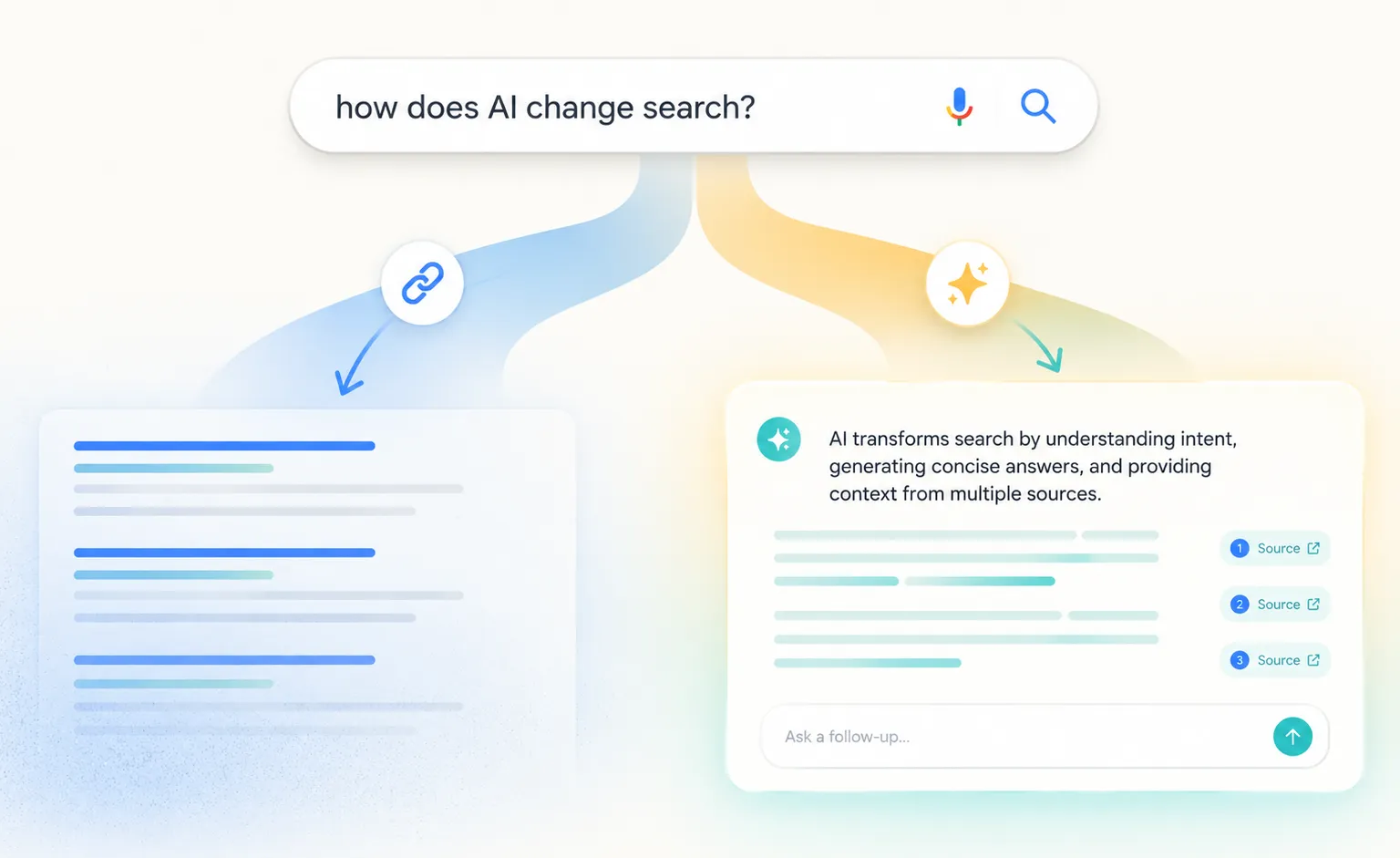
If you’ve noticed your Google search bar now has an “AI Mode” tab sitting right next to Images and News — you’re not imagining things. Google has rolled out one of the biggest changes to Search in decades, and it has real consequences for anyone who runs a website, writes content, or relies on organic traffic.
For years, Google Search was built around blue links. You searched for something, compared a few websites, and clicked through to learn more. AI Mode changes that experience completely.
Now, Google often gives users a complete AI-generated answer instantly — before they ever visit a website.
Let’s break down what that actually means for SEO, creators, publishers, and the future of search.
What is Google AI Mode?
Google AI Mode is a conversational version of Google Search powered by Google’s latest Gemini models.
Instead of showing users a simple list of search results, AI Mode generates a detailed answer directly inside Search. Users can ask follow-up questions, upload images, compare products, and continue searching in a chat-like interface without starting over.
Think of it as a built-in AI assistant inside Google Search.
You can ask:
- “What’s the best budget smartphone under ₹20,000 for battery life?”
- “Compare these two laptops for college students”
- “Why is my plant turning yellow?” (with an uploaded image)
And Google responds with a synthesised answer pulled from multiple web sources.
AI Mode first launched in the US in 2025 and rapidly expanded globally. By 2026, it’s available in dozens of languages including English, Hindi, Arabic, and French — and no longer requires a Labs sign-up.
“Being cited by AI is becoming as important as ranking on page one.”
How Google AI Mode actually works
Under the hood, AI Mode uses a technique Google calls query fan-out.
Instead of performing one search query, Google quietly runs multiple related searches simultaneously, gathers information from different websites, forums, reviews, and databases, then combines everything into one conversational answer.
For example, when someone searches:
“What’s the best lightweight laptop for a design student with long battery life?”
AI Mode may simultaneously analyse:
- product reviews,
- benchmark sites,
- Reddit discussions,
- shopping listings,
- YouTube reviews,
- and comparison articles.
Then it summarises the findings into a single response.
For more advanced questions, Google also offers Deep Search, which can run hundreds of searches and generate long-form research-style answers with citations.
What this means for SEO
This is where things get serious for website owners and publishers.
Fewer clicks to websites
When users get complete answers directly inside Google, they have fewer reasons to click external links.
This trend already started with AI Overviews, but AI Mode pushes it much further.
Several publishers and SEO analysts have reported declining click-through rates from AI-generated search experiences. Informational content that once received reliable traffic may now get summarised directly inside Search.
For websites dependent on ad revenue, affiliate clicks, or informational traffic, this shift is significant.
But your content still powers AI Mode
Here’s the important part many people miss:
AI Mode still depends heavily on content from across the web.
Google needs:
- fresh reporting,
- detailed guides,
- expert insights,
- product reviews,
- community discussions,
- and original research.
That means:
- Your website can still be cited as a source
- High-quality pages still matter
- Strong authority increases visibility
- Unique content becomes more valuable
Being the source AI Mode references is quickly becoming the new version of ranking #1.
Search queries are becoming much longer
Google CEO Sundar Pichai has noted that searches inside AI Mode are significantly longer than traditional Google searches.
Instead of typing:
“best laptop”
Users now search like this:
“What’s the best lightweight laptop for a college student who uses Adobe apps and needs strong battery life?”
This changes keyword strategy completely.
Long-tail keywords, conversational phrasing, and question-based content are becoming far more important than short generic keywords.
AI Mode vs traditional Google Search
| Feature | Traditional Search | Google AI Mode |
|---|---|---|
| Result format | Blue links | AI-generated answers |
| Search style | One query at a time | Conversational |
| Follow-up questions | New search required | Continue in the same thread |
| Media support | Mostly text | Text, image, and voice |
| Information depth | Depends on clicked pages | Combined from many sources |
| Citations | Organic rankings | Inline source links |
| Best use case | Finding specific websites | Research and comparisons |
What content still gets clicks in an AI-first search world?
Not all traffic is disappearing. Certain types of content still attract strong engagement because AI summaries can’t fully replace them.
1. Original research and data
AI can’t invent your exclusive case study, survey, benchmark test, or experiment.
If your website publishes unique information, Google still needs to cite the original source.
2. Tools and interactive content
People may read an AI explanation about EMI calculations — but they still need to use an actual EMI calculator.
Interactive tools remain valuable.
Examples:
- calculators,
- templates,
- generators,
- checklists,
- dashboards,
- and web apps.
3. Local and real-time information
Users still click websites for:
- local business updates,
- event schedules,
- pricing,
- live news,
- and rapidly changing information.
Freshness matters more than ever.
4. Detailed tutorials and walkthroughs
A short AI summary may explain a topic — but users often still want detailed visual guidance.
Step-by-step tutorials, screenshots, workflows, and practical examples continue to perform well.
For example:
A recipe blog may lose clicks for “how long to boil eggs,” but gain visibility when AI Mode cites its original cooking experiments, comparison tables, or unique recipes.
5. Personality and strong opinions
AI responses are designed to sound neutral and balanced.
Human personality still stands out.
People continue to seek:
- creator opinions,
- expert takes,
- personal experiences,
- reviews,
- and storytelling.
A distinct voice is harder for AI systems to replace.
What website owners should do now
You don’t need to panic — but SEO strategy does need to evolve.
Here are the biggest shifts creators and publishers should focus on in 2026:
Write for questions, not just keywords
Structure content around real questions users ask naturally.
Good examples:
- “Is Google AI Mode reducing website traffic?”
- “How do AI search engines choose sources?”
- “Can blogs still rank in AI search?”
Improve content structure
AI systems prefer clean, organised pages.
Use:
- headings,
- bullet points,
- tables,
- FAQs,
- and clear formatting.
Well-structured pages are easier for AI systems to understand and cite.
Add original insights
If your article says the exact same thing as 50 others, AI Mode will simply summarise everyone together.
Add:
- personal testing,
- screenshots,
- examples,
- unique workflows,
- opinions,
- or first-hand experience.
That’s what separates valuable content from generic content.
Build topical authority
Websites covering a subject deeply are more likely to become trusted citation sources.
Instead of writing random articles across unrelated topics, focus on building expertise around:
- AI tools,
- SEO,
- creator workflows,
- filmmaking,
- or your specific niche.
Topical depth matters more now.
Monitor impressions — not just clicks
Your content may appear inside AI-generated answers even when users don’t click through directly.
That means:
- impressions,
- citations,
- and visibility
are becoming increasingly important metrics alongside traditional traffic.
Google Search Console will help track those trends.
What changed in 2026 — and why publishers care
Google has faced criticism from publishers concerned that AI answers reduce website traffic.
In response, Google introduced several updates during 2026 aimed at sending more users back to original sources.
| Update | What changed |
|---|---|
| Inline source links | Citations now appear beside relevant statements |
| Hover previews | Desktop users can preview sites before clicking |
| Subscription highlights | Paid/subscribed publications receive visible labels |
| Suggested reading | AI responses now recommend deeper articles |
| Community perspectives | Reddit, forums, and creator discussions appear more often |
These changes show Google understands that healthy websites are essential for the long-term future of Search.
The March 2026 Core Update also reinforced a clear pattern:
- authoritative sites held visibility,
- well-structured content performed better,
- and thin generic pages lost rankings quickly.
The bottom line
Google AI Mode is not killing good content.
It’s killing generic content.
If your website exists only to repeat basic information that AI can instantly summarise, traffic will likely decline.
But websites with:
- real expertise,
- unique perspectives,
- original research,
- strong structure,
- and useful experiences
still have enormous value.
SEO isn’t disappearing.
The rules are simply evolving from:
“Who ranks highest?”
to:
“Who provides the most useful source worth citing?”
Last updated: May 2026. Google continues to update AI Mode rapidly as AI-powered search becomes central to the future of Search.
Discussion
Sign in with GitHub to join the conversation.